


2026 changed the accessibility compliance landscape for video teams - and 2027 is when many of those changes become operational priorities. From new captioning requirements for Canadian streaming services to shifting US accessibility deadlines and tougher quality expectations in Europe, the regulatory landscape is complex.
For organisations managing large video libraries, multiple languages and live content, compliance is not simply about whether captions exist. It's about their accuracy, accessibility, consistency and the ability to deliver them at scale.
Here's what changed in 2026, which deadlines matter in 2027, and how your video teams should prepare for 2027.
Captioning regulations in 2026 at a glance
- US (FCC): caption display settings on TVs, set-top boxes and other video devices must be readily accessible. In force since 17 August 2026.
- US (DOJ and HHS): ADA Title II and Section 504 web accessibility deadlines pushed back a year. 26 April 2027 for larger state and local governments; 11 May 2027 for larger HHS-funded organisations.
- Canada (CRTC): caption requirements for large online streaming services. 25 May 2027 for new original and live programmes.
- EU: first full year of the European Accessibility Act. Already applies, since 28 June 2025.
- UK (Ofcom): draft subtitle, audio description and signing quotas for large streaming services. Final code expected by the end of 2026.
United States FCC rules for set-top boxes and devices
The Federal Communications Commission (FCC) now requires device manufacturers and pay TV distributors to make caption display settings readily accessible, so viewers can find and change things like caption size, font and colour without digging through menus.
The compliance date was 17 August 2026 (FCC public notice DA 25-48).
It's aimed at hardware and distributors, but it matters to anyone publishing video: viewers can only restyle captions that arrive as a separate caption track. Captions burnt into the picture can't be resized or recoloured.
The bigger story for public sector teams was the delay to the Americans with Disabilities Act (ADA) Title II web rule. In April the Department of Justice gave state and local governments serving 50,000 people or more until 26 April 2027, and smaller entities until 26 April 2028. In May the Department of Health and Human Services (HHS) followed with the same one-year extension for organisations covered by its Section 504 rule, moving their dates to 11 May 2027 and 10 May 2028 (Duane Morris; Duane Morris on HHS).
The standard didn't change: it's still WCAG 2.1 Level AA. Level AA means captions are required for prerecorded and live video. The same guidelines sit behind EN 301 549, the European standard for accessible ICT, so one caption workflow serves both regions.
For larger US public bodies, the extra year is now down to about five months.
Canada: caption targets for streaming services
In May, the Canadian Radio-television and Telecommunications Commission (CRTC), Canada's broadcasting and telecoms regulator, set caption rules for online streaming services for the first time (CRTC 2026-98). They apply to English and French programmes on streaming services that have to register with the CRTC, which generally means those earning C$10 million or more a year in Canadian broadcasting revenue.
By 25 May 2027, those services need captions on all new original pre-recorded programmes, all original live programmes and all programmes already captioned on TV. The rest of the catalogue follows: 80% by 27 May 2030 and 100% by 26 May 2031. Annual reports start on 30 November 2027.
New original pre-recorded programmes are held to 100% accuracy, covering spelling, non-speech information such as sounds and speaker identity, placement and synchronisation. This means reviewing and post-editing captions. CaptionHub's automated LQE workflows can reduce the manual work to get to near-100-100 (100% accuracy, 100% of the time) - and efficiently highlight changes for linguists to carry out more work in less time.
Europe and the UK: quality also counts as well as coverage
The European Accessibility Act (EAA) marked its first year in force in June 2026 (National Disability Authority, Ireland). For video, it applies to the services people use to find and watch TV and similar content, such as websites, apps and electronic programme guides. Those services have to pass on access services like subtitles and audio description "fully transmitted in high quality, accurately displayed, and synchronised with sound and video", and give viewers control over how they're shown (Taylor Wessing). The EAA doesn't itself require every programme to be captioned; that comes from national rules.
In the UK, Ofcom, the communications regulator, published a draft Tier 1 Accessibility Code in May for streaming services with more than 500,000 UK users and the public service broadcasters' on-demand services (Ofcom).
Subtitles would build up from 20% of the catalogue after the first year to 80% after the fourth (90% for the BBC), with audio description reaching 10% and signing 5% (CMS). Services based outside the UK can qualify. Ofcom's draft is clear that "poor quality access features will not count towards quotas". The final code is expected by the end of 2026.
Put Canada, the EU and the UK side by side and regulators are now measuring caption quality as well as how much video is captioned.
The bigger shift is from caption coverage to caption quality
Captioning compliance is no longer just about how much content has captions. Regulators are placing greater emphasis on accuracy, synchronisation and quality.
Canada's new requirements set strict accuracy standards, while Ofcom's proposed UK rules make clear that poor-quality subtitles won't count towards quotas.
For video teams, the challenge is twofold: scaling caption production while maintaining consistent quality, across growing video libraries, multiple languages and live content.
AI and automation can help manage the volume, but quality checks, terminology controls and human oversight remain essential - however tools such as LLM Language Quality Evaluation which is deeply integrated into CaptionHub can hugely alleviate the manual work required. In 2027, the priority is building workflow scaffolding that deliver accessible, high-quality video captions at scale.
What to plan for in 2027: a checklist for video teams
- Map the rules to your audiences. Start with where your viewers are, not where you're based, and list the dates above that apply to you.
- Inventory your VOD content and live streams. Export every video from your video platforms with recent views, and list the live events and streams you run on a schedule. That tells you how big the job is.
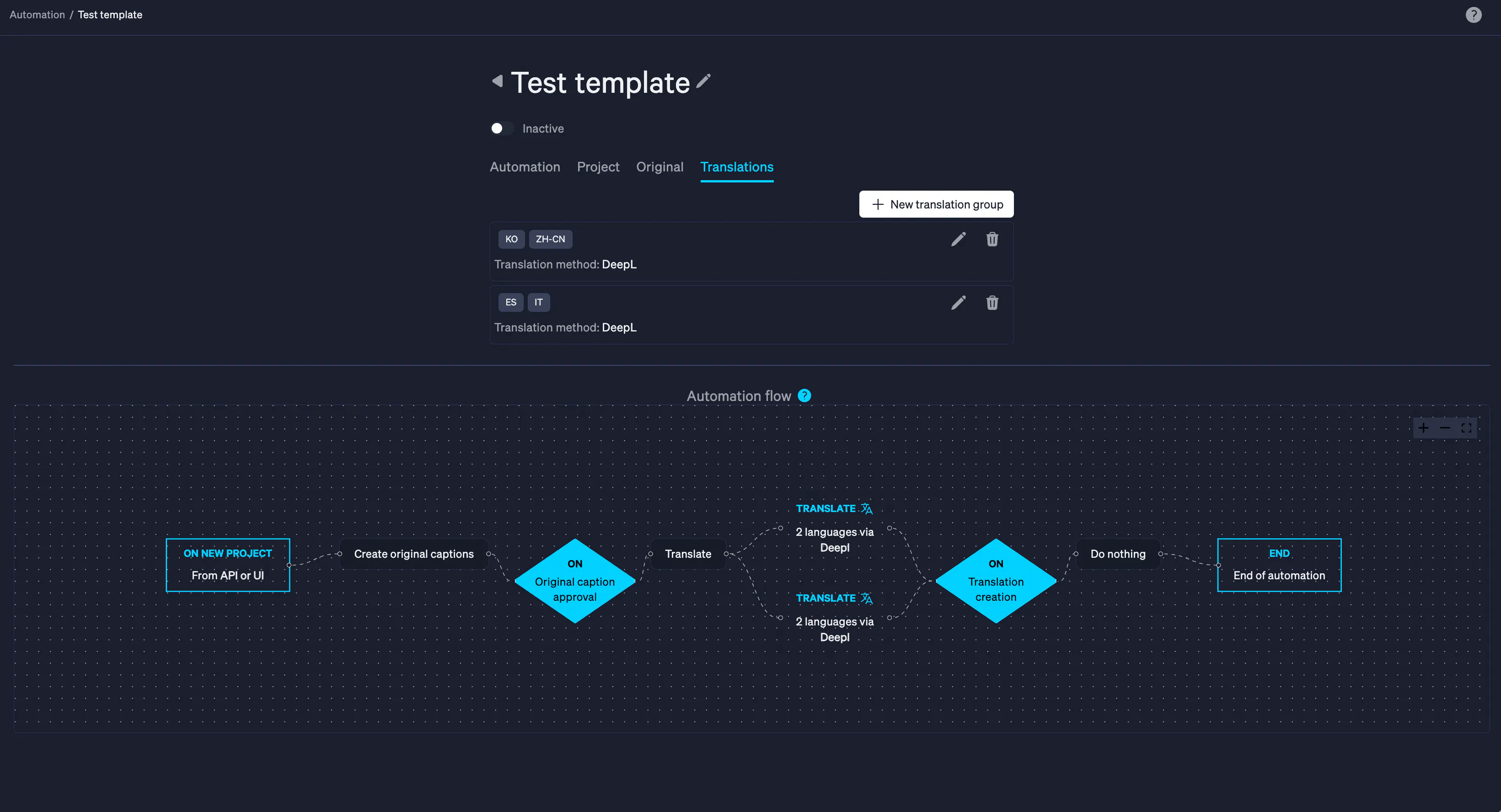
- Automate your captioning backlog. Meeting catalogue coverage targets means managing large volumes of content without creating an equally large manual workload. CaptionHub Automation can import videos from platforms including Brightcove, Vimeo and YouTube, generate and translate captions using your terminology rules, and publish them back automatically. Apply the same workflows to new uploads to prevent the backlog from growing.
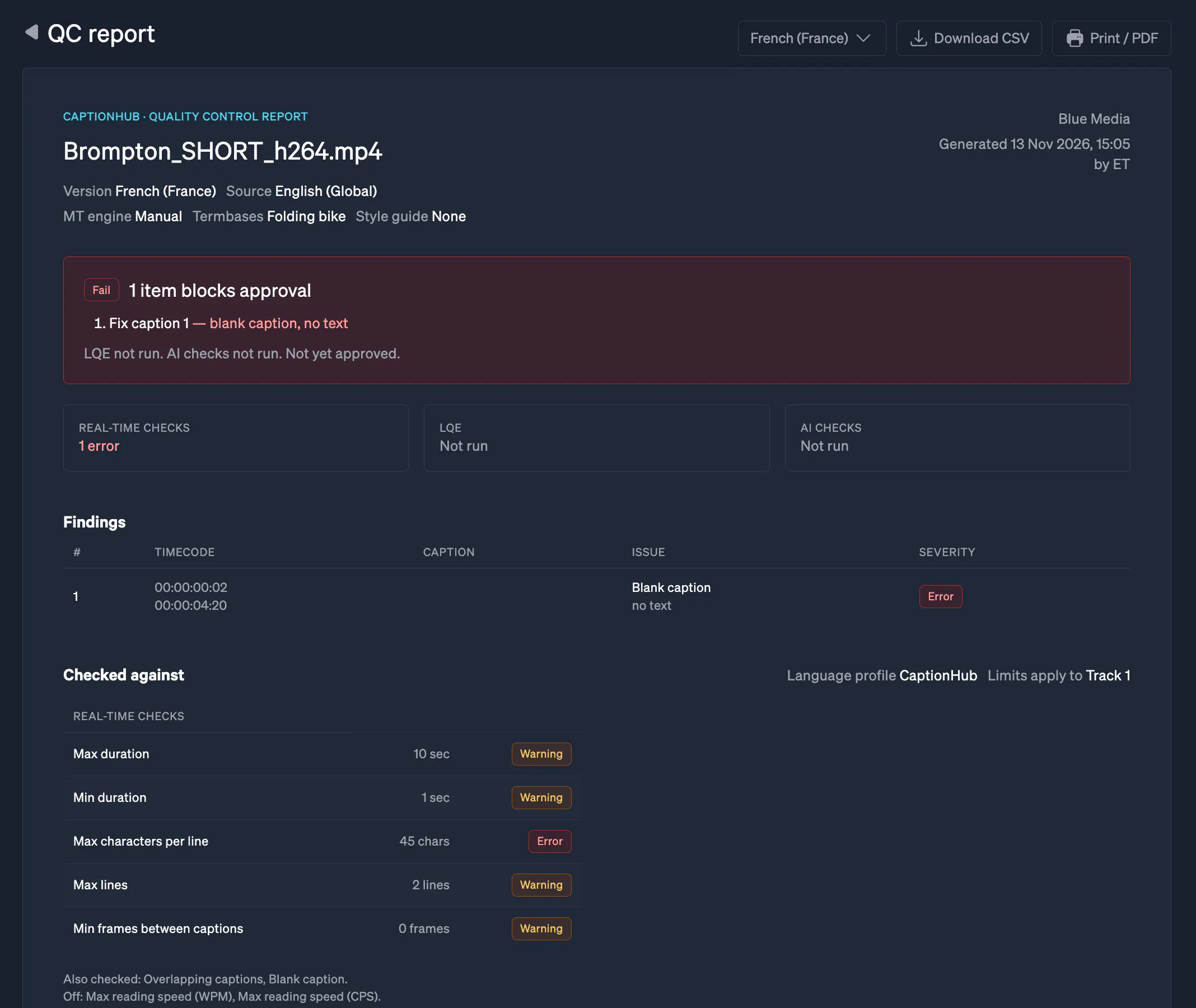
- Build quality assurance into every workflow. As regulators increase their focus on caption accuracy, producing captions is only half the challenge. Teams also need consistent processes for reviewing and validating them. CaptionHub's built-in QC reports flag issues against defined captioning standards, provide Pass or Fail results and create downloadable records of automated checks. Combined with human review where appropriate, this helps teams maintain quality at scale.
- Plan live captions as well as VOD content. Canada's rules cover original live programmes, and WCAG 2.1 AA covers live video. Timbra, CaptionHub's live captioning and translation product, adds captions and translations to live streams through player plugins and YouTube, using the same custom dictionaries and termbases as your VOD content.
- Deliver captions as a caption track. Publishing caption files to your video platform, rather than burning captions into the picture, lets viewers use the display settings the FCC and the EAA now expect them to have.
- Prioritise in next year's budget now. If your financial year starts in April or July, the money for 2027 deadlines is being decided over the next few months.
- Assign ownership and track progress. Establish who is responsible for caption coverage, quality assurance and compliance reporting. Set measurable targets, monitor progress against regulatory deadlines and ensure accessibility is built into your ongoing video publishing workflows.
Start your 2027 captioning plan now
With new deadlines approaching, now is the time to assess your video library, identify accessibility gaps and build workflows that can scale.
From automated captioning and translation to quality assurance and live accessibility through Timbra, CaptionHub helps video teams deliver accessible content efficiently and consistently.
Book a demo to see how CaptionHub can support your 2027 accessibility priorities.
See CaptionHub in action
Get a personalised walkthrough of captioning, translation and voiceover at enterprise scale.


